Arturo Izquierdo 5:32 pm No Comments
Best Time to Trim Trees in Fort Lauderdale Before Hurricane Season
If you own a home or manage a property in Fort Lauderdale, I recommend looking at your trees before hurricane season starts, ideally between February and May.
The Atlantic hurricane season officially runs from June 1 through November 30, according to the National Hurricane Center. Once the season is active, tree companies get busier, debris removal can become harder to schedule, and many homeowners start making decisions under pressure.
My name is Arturo Izquierdo, and I’m the owner of Tree Motion LLC. We provide professional tree service throughout Fort Lauderdale, Broward County, Palm Beach County, and Miami-Dade.
Every year, especially before and after major storms, I see how much of a difference early tree care can make.
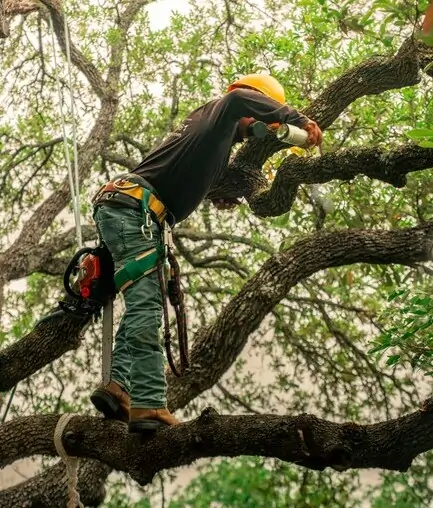
The trees that worry me the most are rarely just the “big trees.”
What usually is more concerning to me are trees with dead branches, heavy limbs growing over a roof, weak branch unions, decay near the tree trunk, poor past pruning cuts, and trees with signs of root movement.
These trees can become dangerous pretty quickly.
But even “normal” trees without such issues should usually be trimmed, or at least inspected before the hurricane season hits Fort Lauderdale.
Why timing matters in Fort Lauderdale
Fort Lauderdale is a great place for trees, but it can also be a tough environment at times.
Our trees deal with a lot of heat, salt exposure, sandy soils, heavy rain, strong afternoon storms, and hurricane-season winds.
A tree can look healthy from the street and still have structural issues that urgently require professional attention.
That is why I like to inspect trees early.
When there is enough time, we can make better decisions. We can look at the full structure of the tree, decide which limbs need to be reduced, remove deadwood, and improve clearance around the roof, driveway, fence, pool, walkways, etc.
Good storm preparation is selective. That means it’s about reducing the right weight in the right places and at the same time keeping the tree healthy and balanced.
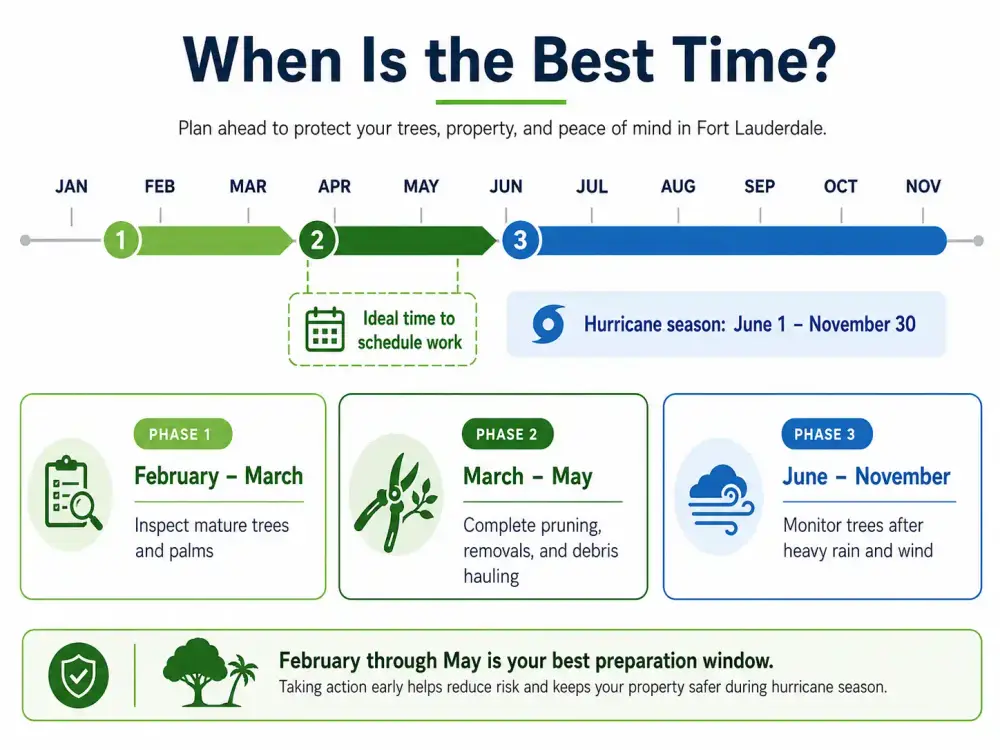
The best window is February through May
For most Fort Lauderdale properties, February through May is the best window for storm-season pruning.
That gives you time to inspect mature trees and palms, remove deadwood, reduce overextended limbs, clean up broken or cracked branches, and finish debris hauling before the busiest part of the season.
If you can schedule the work by April or May, that is ideal.
UF/IFAS gives similar guidance in its hurricane preparation advice for trees. Their recommendations include having larger trees pruned by a certified arborist before hurricane season.
That usually means removing dead branches, shortening overly long branches, addressing cracked limbs, and thinning the outer canopy correctly.
You can read their guidance here: Preparing Trees for Hurricanes, UF/IFAS Gardening Solutions.
What they are recommending matches what I’m generally focused on as well:
For storm prep pruning our goal is mainly a stronger tree structure, better clearance, and a canopy that can move with the wind more easily and naturally. At the same time we don’t remove more than is actually necessary, because that would also be detrimental in the mid and long-term.
What I look for during a storm-season inspection
When I inspect a tree before storm season, I usually start with dead branches. They are often the easiest hazards to correct.
Then I look at large limbs with heavy end weight, branches rubbing against the roof, limbs growing toward the house, weak branch attachments, cavities, cracks, old cuts, and signs of root movement.
With palms, I look for dead fronds, broken fronds, seed pods, heavy fruit clusters, and loose material that could fall around walkways, driveways, pools, or parking areas.
The work should fit the tree.
A mature oak, black olive, mahogany, gumbo limbo, and palm trees all need different pruning decisions.
Even two trees of the same species may need different care depending on where they are growing and how they were maintained in the past.
That is why storm preparation should be based on inspection, not just a quick trim.
What proper pruning should look like
A properly pruned tree should still look natural when the work is done.
Here’s an example of what it should NOT look like:
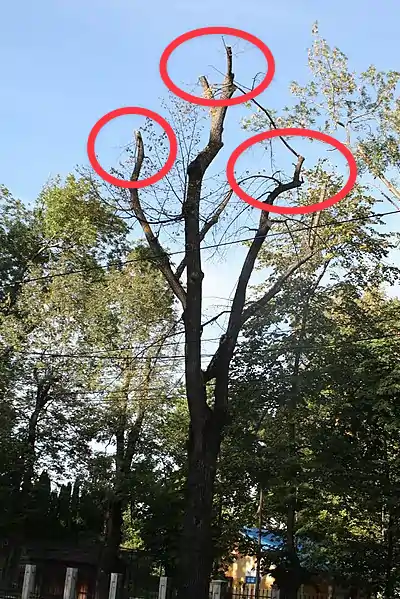
In many cases, the best work is subtle. The tree looks cleaner, lighter in the right areas, and better balanced, but it still has its natural shape.
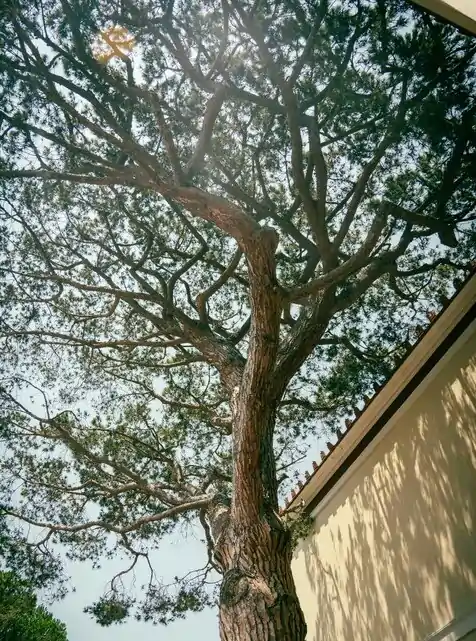
For storm preparation, I usually focus on weak, dead, cracked, crowded, or overextended branches. I also look for branches that are too close to structures or growing into areas where they can cause damage during wind.
The City of Fort Lauderdale’s storm-ready tree guidance also emphasizes healthy pruning to maintain strength and form while allowing wind to pass through the canopy more easily.
In my opinion, that is the right idea.
A tree should be prepared in a way that respects how it grows.
My recommendation for Fort Lauderdale homeowners
If you want your trees ready for storm season, plan early.
A simple schedule is:
- February to March, inspect mature trees and palms.
- March to May, complete pruning, removals, and debris hauling.
- June to November, monitor trees after heavy rain and wind.
After major storms, check for cracks, leaning, hanging limbs, and root movement.
In Fort Lauderdale, good tree care before storm season is rarely about dramatic work.
It is about knowing what to look for, making the right cuts, and giving the tree the best chance to stay strong.
Need help preparing your trees for storm season?
If you are unsure whether your trees need trimming, removal, or a professional inspection, my team and I can help.
At Tree Motion, we provide professional hurricane preparation services, which mostly means inspecting trees and where necessary trim and prune them properly – in alignment with local trimming codes and regulations.
We work with homeowners, HOAs, property managers, and commercial properties in Fort Lauderdale, and all of Broward and Palm Beach County.
We will walk the property with you, look at the structure of your trees, explain what needs attention, and help you prepare before storm season becomes urgent.
If you would like us to take a look, reach out and request an estimate.

Arturo Izquierdo
Arturo is an ISA-Certified Arborist and advisory board member for the University of Florida’s Commercial Horticulture program for Broward and Palm Beach County. With 20+ years of experience in the tree care industry, he provides expert guidance on tree care, risk assessment, and proper landscape practices. He is also the owner of Tree Motion LLC, a Fort Lauderdale based tree care company.